Extraordinary People Shouldn't Have to Carry Everything Alone
Motherhood doesn't end ambition. It changes the way we pursue it.
This is the first chapter in our four-part editorial series, Extraordinary People Shouldn't Have to Carry Everything Alone. Through the stories of 13 remarkable women in sport, we explore how motherhood, identity, recovery and support intertwine, revealing that behind every extraordinary achievement is a village helping to carry the weight.
In this opening chapter, we meet three women who didn't simply return to elite sport after becoming mothers—they challenged outdated systems, rewrote the rules and created lasting change for the women who would follow. Their stories remind us that progress isn't just measured in medals, but in the doors they opened for future generations.
Chapter One
Changing the Rules
"Strength isn't measured by how quickly you return. It's measured by having the courage to write your own story."
There was a time, not so long ago, when becoming a mother was quietly viewed as the end of an elite sporting career.
Sponsors disappeared.
Contracts were cancelled.
Athletes hid pregnancies for fear of losing selection.
Women were expected to choose between chasing medals and raising children, as though the two ambitions were somehow incompatible.
Thankfully, that narrative is beginning to change.
Across every discipline, from ultramarathons and athletics to football, equestrian sport and beach volleyball, a remarkable generation of women is refusing to accept outdated expectations. They are proving that motherhood doesn't diminish ambition. If anything, it deepens it.
Yet these women aren't just winning races or collecting medals.
They're changing policies.
They're rewriting contracts.
They're forcing governing bodies to recognise pregnancy, postpartum recovery and breastfeeding as normal parts of an athlete's career, not obstacles to it.
For every headline about a mother winning Olympic gold or returning to competition weeks after giving birth, there are thousands more women quietly asking themselves a different question.
"Will I ever feel like myself again?"
It's a question that reaches far beyond elite sport.
Whether you're training for the Olympics, hoping to run your first 5K after birth or simply trying to remember what uninterrupted sleep feels like, motherhood changes your relationship with your body. Recovery isn't linear. Confidence doesn't always arrive on schedule. Neither does rest.
At Amae, we believe no woman should have to navigate that journey alone. Our mission is rooted in a simple belief: that every mother deserves practical, meaningful support during the fourth trimester and beyond, helping her feel seen, cared for and connected through her village.
These thirteen women remind us why that matters.
Because behind every extraordinary comeback is something we rarely celebrate enough.
1. Sophie Power
The Woman Who Changed Endurance Sport for Mothers Everywhere
If you'd told Sophie Power twenty years ago that she'd become one of the world's most influential ultrarunners, she probably wouldn't have believed you.
In fact, she hadn't even completed her first run before signing up for an ultramarathon.
It was redundancy, not sporting ambition, that first nudged her towards endurance running. Looking for a fresh challenge, Power entered a race that most seasoned runners would find intimidating. What began as a distraction quickly became a lifelong passion.
But it wasn't her race results that would ultimately change the sport.
It was a photograph.
The image that changed everything
 In 2018, photographer Alexis Berg captured Sophie sitting on the side of a trail during the 106-mile Ultra-Trail du Mont-Blanc (UTMB), breastfeeding her three-month-old son, Cormac (see above).
She wasn't posing.
She wasn't making a statement.
She was simply feeding her baby before continuing one of the toughest endurance races in the world.
Within hours, the photograph had travelled around the globe.
Millions of people saw something that had almost never been visible in elite sport: motherhood and world-class athletic performance, coexisting.
Yet behind the powerful image was an uncomfortable truth.
Sophie hadn't been able to defer her race entry after becoming pregnant.
Like many sporting events at the time, there was no pregnancy deferral policy. Women were effectively forced to choose between pregnancy and years of qualification effort.
It wasn't just unfair.
It actively discriminated against mothers.
Turning one moment into lasting change
Rather than simply telling her story, Sophie began campaigning for structural change.
She worked alongside race organisers, governing bodies and campaign groups to encourage events to introduce pregnancy and postpartum deferral policies.
The results have been extraordinary.
Today, many of the world's biggest endurance events, including the London Marathon, UTMB World Series races and numerous international trail events, now offer pregnancy deferrals, protecting women's places while they grow their families.
It's a simple policy.
But for thousands of women, it changes everything.
Instead of viewing pregnancy as an interruption, sport is beginning to recognise it as a natural part of life.
Why Sophie's story matters to every mother
Not every woman wants to run 106 miles.
But almost every mother understands what it feels like to wonder whether becoming a parent means giving something up forever.
Sophie reminds us that motherhood doesn't erase who we were before.
Sometimes, it simply changes how we arrive there.
"Every mother deserves the chance to return when she's ready, not when a race calendar decides."
2. Ros Canter
The Event Rider Who Made History Just Weeks After Giving Birth

Few sports demand the trust, precision and courage of eventing.
Riders spend years developing partnerships with horses capable of tackling dressage, cross-country and showjumping at the highest level.
Ros Canter has long been one of Britain's finest.
But in 2026, she achieved something that resonated far beyond the equestrian world.
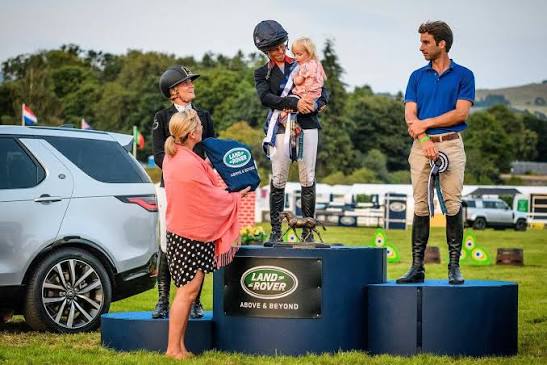
She became the first rider to win the prestigious Mars Badminton Horse Trials three times on the same horse, Lordships Graffalo, affectionately known as Walter.
What made the victory extraordinary wasn't simply the record.
It was the timing.
Ros crossed the finish line just sixteen weeks after giving birth to her second daughter, Seneh.
Competing through pregnancy
Ros has spoken openly about how remaining active during pregnancy supported both her physical and emotional wellbeing.
In September 2025, she defended her Burghley Horse Trials title while five months pregnant, carefully adapting training around medical advice and how her body felt each day.
Her story reflects a growing body of research.
A study led by Hartpury University found that elite equestrian athletes often continue riding later into pregnancy than athletes in many other sports, largely due to years of highly developed balance, coordination and muscle memory.
The important message isn't that every woman should do the same.
It's that every pregnancy is individual.
Every return is individual.
And women deserve the autonomy to make informed decisions about their own bodies.
A different kind of preparation
Ros returned to riding four weeks after giving birth.
Competition followed around eight weeks later.
But behind the medals were realities familiar to millions of mothers.
Sleepless nights.
Breastfeeding.
Expressing milk between phases of competition.
Planning childcare alongside course walks.
She has often spoken about relying on husband Chris, her wider support team and the fact that Seneh accompanies her to the family farm each day.
It's a powerful reminder that no comeback happens alone.
Behind every successful return is usually an invisible village.
Why Ros's story matters
Ros doesn't present motherhood as effortless.
She presents it honestly.
The juggling. The exhaustion. The logistics. The moments where preparation looks less like perfect routines and more like feeding a baby before entering one of the world's biggest sporting arenas.
For many mothers, that's the most empowering message of all.
You don't have to have everything perfectly balanced.
You simply have to keep going.
3. Allyson Felix
The Olympian Who Changed Maternity Rights Forever

Before Allyson Felix became one of the most decorated athletes in Olympic history, she became something arguably even more influential.
An advocate.
By the time she announced her pregnancy in 2018, Felix already owned six Olympic gold medals and countless World Championship titles.
She was one of Nike's biggest stars.
Yet behind the scenes, contract negotiations told a very different story.
After becoming pregnant, Felix says Nike proposed a significant reduction in her sponsorship payments while refusing to guarantee protection if pregnancy affected her performance.
Rather than quietly accepting the terms, she did something few athletes had ever dared to do.
She spoke publicly.
Her New York Times opinion piece became a watershed moment in women's sport.
Suddenly, conversations about maternity discrimination weren't happening behind closed doors.
They were making front-page news.
Changing the industry
The response was enormous.
Following public pressure, Nike introduced a maternity policy protecting athletes' pay during pregnancy and the postpartum period.
Other global brands soon followed.
What had once been considered a private contractual issue became a public conversation about equality.
Today, many sponsorship agreements include maternity protections because women like Allyson Felix refused to stay silent.
A remarkable return
Felix's daughter, Camryn, arrived via an emergency Caesarean section after Felix developed severe preeclampsia, a life-threatening pregnancy complication.
Recovery was neither simple nor quick.
Yet less than a year later she returned to elite competition.
At the delayed Tokyo Olympic Games, Felix won bronze in the 400 metres and gold in the women's 4x400m relay.
With eleven Olympic medals, she became the most decorated female track athlete in Olympic history.
But ask many women what they admire most about Allyson Felix, and it isn't the medals.
It's the fact she used her platform to ensure future mothers wouldn't face the same obstacles she did.
More than medals
Allyson once said:
"We're more than just athletes. We're mothers, daughters and women with lives beyond competition."
Those words echo far beyond the running track.
Because whether you're preparing for the Olympics or simply adjusting to life with a newborn, every mother deserves to know that her value isn't measured solely by productivity.
It isn't measured by how quickly she returns.
Or how quickly she "gets her body back."
Her worth was never lost in the first place.
Coming Up in Part Two...
We'll meet four more remarkable women who have redefined what's possible:
- Serena Williams – rewriting the conversation around birth trauma and recovery.
- Shelly-Ann Fraser-Pryce – the sprint queen proving motherhood can fuel greatness.
- Dame Jessica Ennis-Hill – balancing Olympic ambition with family life.
- Lizzie Deignan – winning one of cycling's toughest races after becoming a mum.
→ Read Chapter Two (coming soon...)